Thursday, September 11, 2008

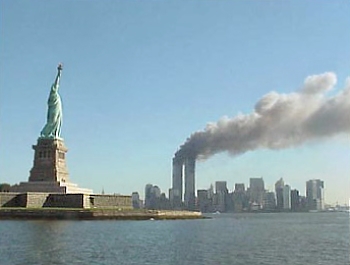
Sept 11th 2001 - Revisited

We honor Sept. 11th 2001 this year by declaring our willingness to protecting our neighbors in Ohio. Cincinnati Change has assembled a team of experienced professionals to engineer, develop, deploy, maintain and sell the Cincinnati Change Universal Access Program for the state of Ohio.

We have plans a four tiered mixed broadband network utilizing wired and wireless technologies in order to (1) make available and promote the assets within a community to encourage and enable all residents to participate effectively in the democratic process, form ties to local institutions and strengthen relationships with one another through a Social network is a mission of Cincinnati Change; (2) support business, government, and education within the community, (3) provide Internet access at competitive and discounted rates on a means tested basis through us and partners, and (4) a special focus of our civic engagement will be on continuity of government within the plans at the federal National Infrastructure Protection Plan, starting with greater Cincinnati. The National Infrastructure Protection Plan (NIPP) is a document, called for by Homeland Security Presidential Directive 7, which aims to unify Critical Infrastructure and Key Resource protection efforts across the country. We will follow the NIPP structure to create partnerships between local stakeholders and the residents of Cincinnati through secure direct connection fiber links to all households in the city.

Tuesday, September 9, 2008

Our Chairwoman met the man whose administration just got over 5 trillion dollars in assets over the weekend.


Current President of the United States and Cincinnati Change (Founding & Current) Chairwoman Ky. Col. Sister (IBEW) Wanda Daniels who is also founder of the Cincinnati Hamilton County Black Republican Forum and Lay Leader of Keys of the Kingdom UMC.

The President, another Methodist, just got administrative control of over 5 trillion dollars in Fannie and Freddie assets this weekend. Cincinnati Change is preparing a policy statement and implementation order based on Presidential Directives that support loans that last to 2050 to be made over the next two years to 200,000 Ohio households; starting with Cincinnati, Ohio.

Quote of the Day

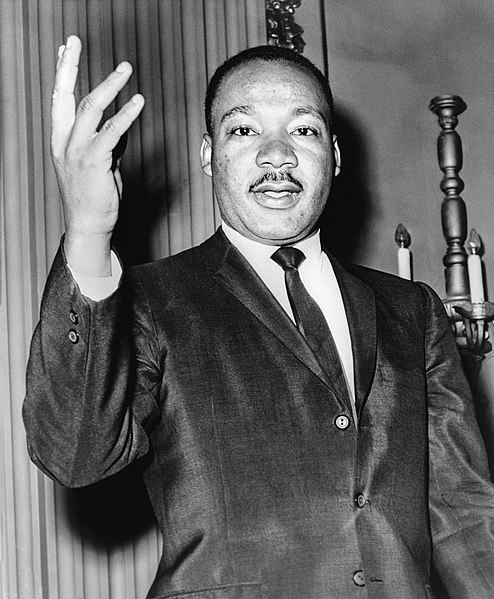
"Change does not roll in on the wheels of inevitability, but comes through continuous struggle. And so we must straighten our backs and work for our freedom. A man can't ride you unless your back is bent."

Rev. Dr. Martin Luther King

Fannie Mae & Freddie Mac Are the Latest Casualties in the War on American Homes

Fannie Mae & Freddie Mac Are the Latest Casualties, But Not the Last, of Failure to Address Foreclosure Crisis


More financial institutions will fail if foreclosure crisis continues to be ignored.


Washington, DC - ­ The National Community Reinvestment Coalition (NCRC) today said that the government¹s takeover of Fannie Mae and Freddie Mac was unavoidable as a direct result of the failure of Congress and the Administration to address the ongoing foreclosure crisis. Earlier intervention to stem the foreclosure crisis would have been a more efficient and equitable use of taxpayer dollars. In addition to avoiding the collapse of financial institutions, doing so would have allowed millions of working families to maintain their homes.


While the decision to avoid the collapse of Fannie Mae and Freddie Mac was critical to prevent potentially catastrophic consequences for the credit markets, doing so will not resolve the foreclosure crisis and its ongoing impact on the credit markets and the economy. The complexity and cost of shoring up Fannie Mae and Freddie Mac ­ including putting the taxpayer at risk for hundreds of billions of dollars ­ will be far greater than would have been intervening to assist homeowners to stay in their homes.


While the intervention to rescue Fannie Mae and

Freddie Mac may temporarily help the credit markets,

the prospect for millions of additional foreclosure

leaves many more financial institutions vulnerable to

failure. The fact that continues to be ignored is that

financial institutions are failing because families are

losing their homes, said NCRC President & CEO John

Taylor.


Congress and the Administration should focus more attention on helping homeowners saddled with unfair and deceptive loan products.

In addition to failing to stem foreclosures, Congress and the Administration also have not enacted an anti-predatory lending law to ensure this debacle does not occur again.


Financial institutions had already acknowledged more than $470 billion dollars worth of losses even before the failure of Fannie Mae and Freddie Mac, yet even these dramatic event shave not been sufficient to trigger legislation to protect the American public.


Reckless and irresponsible lending behavior is the cornerstone of the current market crisis,² said Taylor. He continued, If we¹re not dealing with the how we got here, then we¹ll surely get here again.


###


Cincinnati Change is a member of the National Community Reinvestment Coalition (NCRC). NCRC is an association of more than 600 community-based organizations that promote access to basic banking services, including credit and savings, to create and sustain affordable housing, job development and vibrant communities for America's working families.

Saturday, September 6, 2008

Quote of the Day

"Parents," Bertrand Russell observed, "tend to be fond of their children and do not want them made the objects of political schemes. The State cannot be expected to have the same attitude."

Morgan Stanley Hired Gun after the GSE's?

Henry Merritt "Hank" Paulson Jr. (born March 28, 1946) is the United States Treasury Secretary and member of the International Monetary Fund Board of Governors. He previously served as the Chairman and Chief Executive Officer of Goldman Sachs, one of the world's largest and most successful investment banks.

To many Paulson distinguished himself from his two predecessors in the Bush administration by formally identifying the wide gap between the richest and poorest Americans as an issue on his list of the country's four major long-term economic issues to be addressed, highlighting the issue in one of his first public appearances as Secretary of Treasury.

He also helped to create the Hope Now Alliance to help struggling homeowners during the 2007 subprime mortgage financial crisis. The Hope Now Alliance is a cooperative effort between the US government, counselors, investors, and lenders to help homeowners who may not be able to pay their mortgages.

The main criticisms we have with the Alliance are based on the fact that it has not been effective at addressing the increasing problem of foreclosures in the United States, with recent figures indicating that the rate of foreclosures rising faster than the increase in homeowners helped.

WE ARE LOOKING AT 4 MILLION BAD LOANS THATS OVER 30 MILLION AFFECTED AMERICANS!!

It has also been noted that the majority of assistance provided by the Alliance has been to establish repayment plans, rather than actually modifying the terms of the mortgage. For this reason we support a modified National Community Reinvestment Coalition (NCRC) Homeowners Emergency Loan Program (or HELP Now) program for a million bad loans in 50 regions.

Fact: Today, as home prices decline and foreclosures mount, one of the big questions facing policymakers is what to do with Fannie Mae and Freddie Mac, which provide crucial funding for mortgage lenders.Together, they own or guarantee $5.3 trillion of mortgages and securities backed by mortgages out of a total market of a little over $12 trillion dollars.

Fannie Mae was first chartered by the U.S. government in 1938 to help ensure a reliable and affordable supply of mortage funds throughout the country. Today it is a shareholder-owned company that operates under a congressional charter. Like Freddie Mac, safety and soundness oversight is assigned to OFHEO and mission oversight is assigned to the U.S. Department of Housing and Urban Development.

Freddie Mac was chartered by Congress in 1970 as a private company to likewise help ensure a reliable and affordable supply of mortgage funds throughout the country. Today is is a shareholder-owned company that operates under a congressional charter. Like Fannie Mae, safety and soundness oversight is assigned to OFHEO and mission oversight is assigned to the U.S. Department of Housing and Urban Development.

Background: Analysts at Citigroup, Merrill Lynch, and Goldman Sachs since mid-August have issued reports saying the companies had plenty of capital to operate for the near term, and both companies have successfully rolled over debt on schedule in the meantime.

However, the major credit rating companies since August 22 all cut their ratings on preferred stock of the two GSEs on expectations that the share price declines had cut access to capital, increasing the need for emergency financial support.

The companies never lost their access to capital markets where they raise money to support the U.S. housing market, but the biggest buyers of the debt have grown more cautious.

Foreign central banks reduced their holdings of "federal agency" debt in custody at the Federal Reserve in the past week for the seventh week in a row, suggesting a growing aversion to the debt.

Bush Administration Action: Friday, the Treasury said it was "making progress on our work" with Morgan Stanley, the Fed and the companies regulator the Federal Housing Finance Agency and headed by Director James B. Lockhart III . The Treasury had hired Morgan Stanley

on August 5 to advise it on whether the companies were adequately capitalized and help it determine how it would use its new powers to support them.

"These entities are so big and they're so tied into the housing market that it's probably true that we have to take steps to make sure they dont just collapse," Democratic presidential nominee Barack Obama said at a rally in Terre Haute, Indiana. "Because the housing market, which is already weakened, would be in even worse shape it we didn't take some steps."

Paulson called Obama on Friday night to brief the Democratic candidate and Obama discussed the situation on Saturday with his economic advisers, including former Fed Chairman Paul Volcker, a campaign official said.

Separately, an economic adviser to Republican presidential hopeful Sen. John McCain said Paulson had briefed McCain on the situation over the phone on Saturday morning.

The adviser, Douglas Holtz-Eakin, said the Arizona senator would support a short-term solution that would keep any trouble at the two companies from spreading further to financial markets. "Over the long haul he believes we should downsize and privatize them so that they're not a risk to the American taxpayer," he said.


Major Great Society Programs


1964-1974

This was a time period when America was changed lets make 2008 the start of a another great change.


War on Poverty: forty programs that were intended to eliminate poverty by improving living conditions and enabling people to lift themselves out of the cycle of poverty.

Education: sixty separate bills that provided for new and better-equipped classrooms, minority scholarships, and low-interest student loans.

Medicare & Medicaid: guaranteed health care to every American over sixty-five.

The Environment: introduced measures to reclaim our heritage of clean air and water.

National Endowment for the Arts and the Humanities
: created with the philosophy that artists, performers, and writers were a priceless part of our heritage and deserve support.

Job Corps: provided enabling skills for young men and women.

Head Start: program for four- and five-year-old children from disadvantaged families that gave them a chance to start school on an even basis with other youngsters.


Representative sampling of the laws passed during the Johnson administration to promote the Great Society.


HIGHER EDUCATION FACILITIES ACT OF 1963
- DEC. 16, 1963

PREVENTION & ABATEMENT OF AIR POLLUTION (THE CLEAN AIR ACT) - DEC. 17, 1963

VOCATIONAL EDUCATION ACT OF 1963 - DEC. 18, 1963

INTER-AMERICAN DEVELOPMENT BANK ACT - JAN. 22,1964

CIVIL RIGHTS ACT OF 1964 - JULY 2, 1964

URBAN MASS TRANSPORTATION ACT OF 1964 - JULY 9, 1964

FEDERAL-AID HIGHWAY ACT OF 1964 - AUG. 13, 1964

CRIMINAL JUSTICE ACT OF 1964 - AUG. 20, 1964

FOOD STAMP ACT OF 1964 - AUG. 31, 1964

WILDERNESS ACT - SEPT. 3, 1964

NATIONAL ARTS CULTURAL DEVELOPMENT ACT OF 1964 - SEPT. 3, 1964

MANPOWER ACT OF 1965 - APRIL 26, 1965

OLDER AMERICANS ACT OF 1965 - JULY 14, 1965

SOCIAL SECURITY AMENDMENTS OF 1965 - JULY 30, 1965

VOTING RIGHTS ACT OF 1965 - AUG. 6, 1965

HOUSING AND URBAN DEVELOPMENT ACT OF 1965 - AUG. 10, 1965

PUBLIC WORKS AND ECONOMIC DEVELOPMENT ACT OF 1965 - AUG. 26, 1965

DEPARTMENT OF HOUSING AND URBAN DEVELOPMENT ACT - SEPT. 9, 1965

NATIONAL FOUNDATION ON THE ARTS & THE HUMANITIES ACT OF 1965 - SEPT. 29, 1965

AMENDMENT OF FEDERAL WATER POLLUTION CONTROL ACT - OCT. 2, 1965

AMENDMENT TO THE IMMIGRATION AND NATIONALITY ACT - OCT. 3, 1965

HIGHER EDUCATION ACT OF 1965 - NOV. 8, 1965

CHILD NUTRITION ACT OF 1966 - OCT. 11, 1966

CHILD PROTECTION ACT OF 1966 - NOV. 3, 1966

NATIONAL SCHOOL LUNCH ACT - MAY 8, 1968